
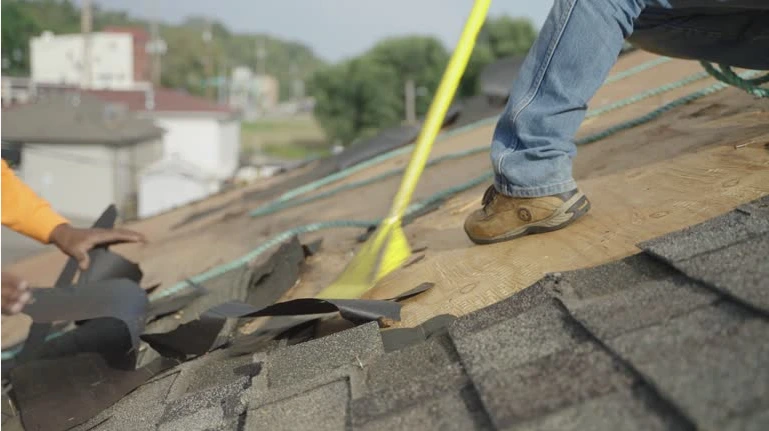
Missing shingles are one of the most common roof problems homeowners may notice after strong winds, hail, heavy rain, or years of weather exposure. While replacing a few missing shingles is often a simple roof repair, widespread shingle loss can indicate that the roof needs more extensive work.
So, should you repair or replace a roof with missing shingles? The answer depends on the number of missing shingles, the age and condition of the roof, the extent of underlying damage, and how well the rest of the roofing system is performing.
If you’re unsure about the condition of your roof, a professional inspection can help identify the problem before water gets into your home.
What Causes Roof Shingles to Go Missing?
Shingles are designed to protect the roof deck from rain, wind, sunlight, and other weather conditions. Over time, however, several factors can cause them to loosen or come off.
Common causes include:
- High winds and severe storms
- Hail damage
- Improper shingle installation
- Aging roofing materials
- Poor roof ventilation
- Repeated exposure to extreme temperatures
- Damaged or deteriorated roofing materials
In North Texas, strong storms and high winds can cause sudden shingle loss. Even if the damage appears small, exposed areas of the roof can allow moisture to reach the materials underneath.
Can Missing Shingles Be Repaired?
Yes. A roof with a few missing shingles can often be repaired without replacing the entire roof.
During a roof repair, a roofing professional can remove damaged materials and install replacement shingles that match the existing roof as closely as possible. The surrounding area should also be checked for loose, cracked, lifted, or damaged shingles.
A repair may be appropriate when:
- Only a small number of shingles are missing
- The remaining shingles are in good condition
- The roof is relatively young
- There are no signs of widespread water damage
- The roof deck and underlayment are still in good condition
- The damage is limited to one area
Prompt repair is important because missing shingles leave the roof surface exposed.
When Should You Consider Roof Replacement?
Roof replacement may make more sense when missing shingles are part of a larger roofing problem.
A replacement may be recommended when:
The Roof Is Near the End of Its Life
Most asphalt shingle roofs have a limited service life. If your roof is already old and experiencing frequent problems, replacing a few shingles may only provide a temporary solution.
A professional roofer can evaluate the overall condition of the roof and determine whether continued repairs are practical.
Many Shingles Are Missing or Damaged
A few missing shingles are different from widespread shingle loss. If a large portion of the roof has been affected by wind or a severe storm, the damage may extend beyond the visible shingles.
In this situation, an inspection can determine whether repair or replacement is the better option.
There Is Water Damage
Missing shingles can expose the roof to rainwater. If water reaches the roof deck, insulation, attic, or interior areas of your home, the problem may be more serious than simple shingle replacement.
Signs of possible water intrusion include:
- Water stains on ceilings or walls
- Damp areas in the attic
- Mold or musty odors
- Peeling paint
- Damaged wood
- Moisture around roof penetrations
The longer water enters through the roof, the greater the potential for additional damage.
Shingles Are Deteriorating Across the Roof
If many shingles are cracked, curled, blistered, brittle, or losing their protective granules, replacing only the missing shingles may not solve the underlying problem.
Widespread deterioration can indicate that the entire roofing system is approaching the end of its useful life.
What Happens If You Leave Missing Shingles Unrepaired?
Missing shingles should not be ignored. They create exposed areas where water and weather can reach the layers underneath.
Over time, this may contribute to:
- Roof leaks
- Rotting roof decking
- Moisture damage
- Mold growth
- Damaged insulation
- Interior ceiling stains
- More expensive repairs
A small roofing problem can become much more complicated when it is left unattended.
How a Professional Roof Inspection Helps
It can be difficult for homeowners to determine the full extent of roof damage from the ground. A missing shingle may be the only visible sign of a larger issue.
During a professional inspection, a roofing contractor can check:
- Missing, cracked, or lifted shingles
- Flashing around roof penetrations
- Roof valleys
- Shingle granule loss
- Signs of storm damage
- Roof decking
- Underlayment
- Attic moisture or water intrusion
- Overall roof age and condition
This information helps determine whether a targeted repair is enough or whether replacement would provide a better long-term solution.
Can You Replace Just a Few Missing Shingles?
In many cases, yes. Replacing individual missing shingles can be a practical solution when the surrounding roofing materials are still in good condition.
However, finding an exact match can sometimes be difficult, especially if the existing shingles have been exposed to the sun and weather for several years. New shingles may look slightly different from older ones.
A professional roofing contractor can assess the roof and recommend the most appropriate repair approach.
Should You Repair or Replace After a Storm?
After a major storm, don’t assume that replacing visible missing shingles will fix the entire problem.
Wind and hail can cause less obvious damage, including lifted shingles, cracks, damaged flashing, and weakened roofing materials. Some damage may not be noticeable from the ground.
If your roof has missing shingles after a storm, scheduling a professional inspection can help identify both visible and hidden damage.
Repair vs. Replacement: Which Option Is Right for You?
There is no single answer for every roof. The right choice depends on the roof’s age, condition, and the amount of damage.
Roof repair may be suitable when:
- Damage is limited to a small area
- Only a few shingles are missing
- The rest of the roof is in good condition
- There is little or no underlying damage
- The roof still has significant service life remaining
Roof replacement may be better when:
- Shingle damage is widespread
- The roof is older
- Shingles are deteriorating throughout the roof
- There are repeated leaks or repairs
- The roof deck has significant damage
- Storm damage affects a large portion of the roofing system
The best way to make the decision is to have the roof professionally evaluated.
How to Prevent Missing Shingles
While severe weather cannot always be prevented, regular roof maintenance can help you identify potential problems before they become more serious.
Consider:
- Schedule regular roof inspections. Professional inspections can uncover loose or damaged shingles early.
- Check your roof after major storms. Look for missing shingles, fallen debris, and other visible signs of damage.
- Keep trees trimmed. Overhanging branches can damage roofing materials during storms.
- Maintain proper attic ventilation. Good ventilation can help protect roofing materials from excessive heat and moisture.
- Address minor problems promptly. Repairing loose or damaged shingles early may help prevent more extensive damage.
Get Your Roof Inspected by Pyramid Roofing
Missing shingles don’t always mean you need a new roof. In many cases, a timely repair can restore the affected area and protect the rest of your home. However, if the roof is older or has widespread damage, replacement may be the more practical option.
Pyramid Roofing can evaluate your roof, identify the cause of the shingle loss, and help you understand whether roof repair or roof replacement is appropriate for your home.
If you’ve recently noticed missing shingles or storm damage, don’t wait for the next rainstorm to expose the problem. A professional roof inspection can help you address the issue early and protect your home from further damage.
Frequently Asked Questions
Is it okay to leave a few missing shingles?
No. Missing shingles expose the underlying roofing layers to the weather. Even if there is no visible leak, it’s best to have the affected area inspected and repaired promptly.
Does one missing shingle mean I need a new roof?
Not necessarily. If the rest of the roof is in good condition, replacing the missing shingle may be all that’s needed. A professional inspection can determine the extent of the damage.
How long can you wait to replace missing shingles?
It’s best to address missing shingles as soon as possible. Delaying repairs can allow rain and moisture to reach the underlying roofing materials and potentially cause additional damage.
Can a roofer tell if I need a repair or replacement?
Yes. A professional roofing inspection can evaluate the roof’s age, materials, visible damage, underlying condition, and overall performance to help determine the appropriate solution.
Should I inspect my roof after a storm?
Yes. Strong winds and hail can cause roof damage that isn’t always immediately obvious. Having your roof inspected after significant storms can help identify problems early.